Systems Engineering
is a technology based interdisciplinary process for bringing systems, products, and structures into being. Within any definition of system engineering, a common theme is a top-down process that is life cycle oriented and integrates functions, activities, and organizations.
Systems Engineering Management
includes the prime activities of systems analysis, design and engineering, and development. It includes the specification for the technical, organizational, cost, time and other parameters of a system and the subsequent management of the required planning, design/engineering, procurement, implementation and testing areas.
The overall system engineering management objectives are to insure that
1. The requirements for the system are initially well defined from the very beginning;
2. The appropriate characteristics are designed-in;
3. The system requirements have been validated.
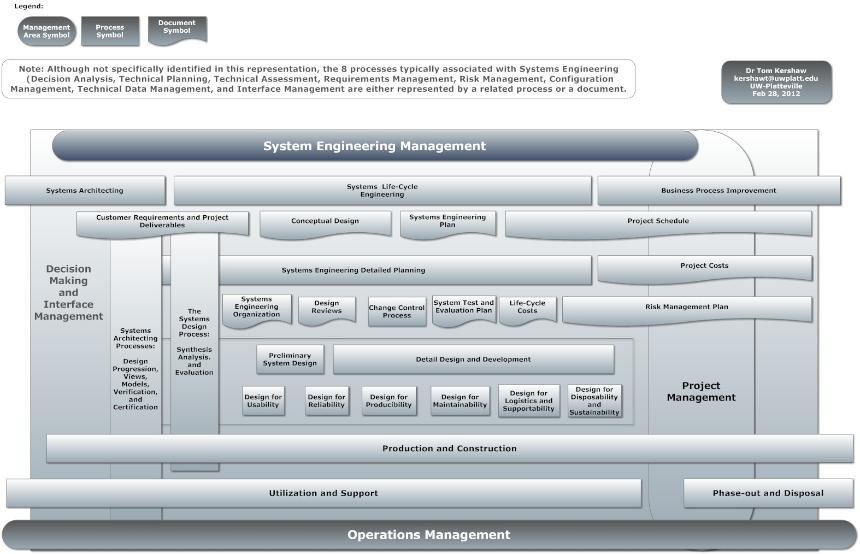
When you look at the visual: There is a general top to bottom and left to right flow--but it is not a flowchart. There is a Venn diagram type relationship between elements--but it is not a Venn diagram.
For example, decision making and interface management are part of every SE activity (so it shows as a box that covers all SE activities); project management is part of systems engineering activities from top to bottom--but it is also more (so it shows both inside and outside SE); both the systems architecting processes and the systems design process flow down from the customer requirements and project deliverables.
|
I recommend that you read this review of Lessons Learned , by John Ruffa, to help you deal with the non-technical issues that are associated with all projects
